
Spent convictions and criminal record checks in WA
By Mei Nair · Updated 2026-07-20
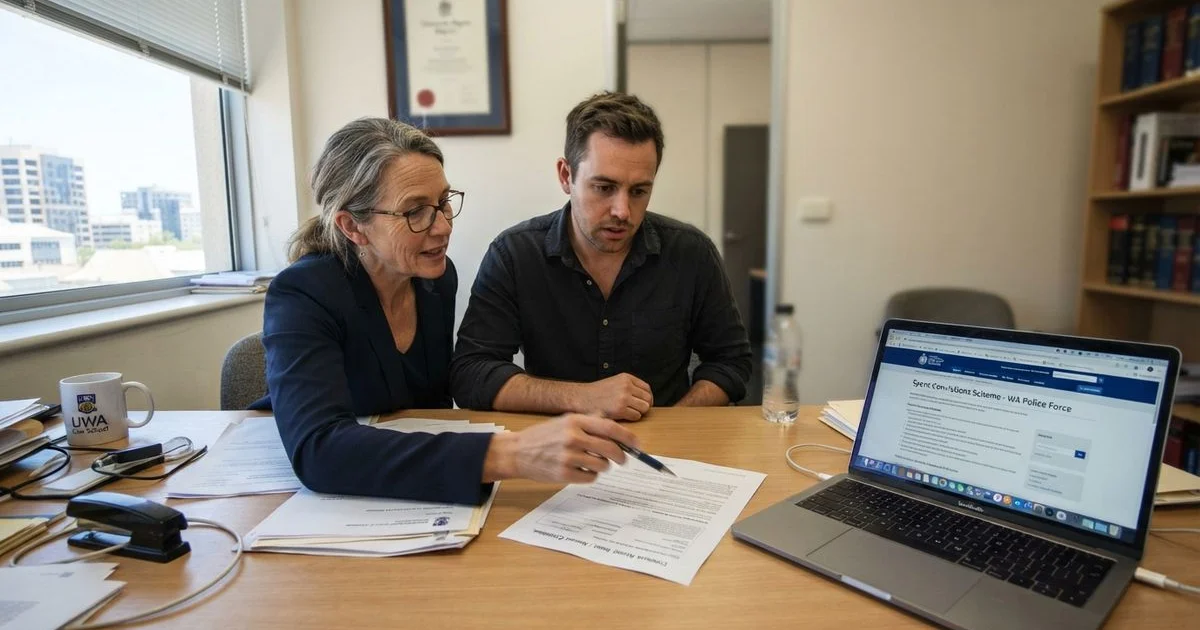
A criminal record can affect far more than most people expect: job applications, some rental applications, licensing, and international travel. Understanding how spent convictions work in WA helps you know what’s realistic to expect from your own record, and when it’s worth getting advice rather than guessing.
What “spent” actually means
A spent conviction is one that, after a sufficient period without further offending and meeting other eligibility criteria, is generally no longer required to be disclosed for most everyday purposes and won’t typically show up on a standard national police check used by most employers. It isn’t the same as having the conviction erased or as if it never happened. It’s a legal status that limits when and how it can be disclosed.
Who typically becomes eligible
Under WA’s spent convictions framework, eligibility generally depends on two things: the type and severity of the offence, and how long has passed without a further conviction. Lesser offences, often those resulting in a fine or a short sentence, are more likely to become spent automatically after a sustained conviction-free period. More serious offences, including those carrying longer prison terms, are generally excluded from ever becoming spent, regardless of time passed.
| Factor | How it typically affects eligibility |
|---|---|
| Offence severity | More serious offences are often excluded from becoming spent at all |
| Sentence type and length | Fines and shorter sentences are more likely to become eligible over time |
| Time since the conviction | A sustained conviction-free period is generally required |
| Further offending | Additional convictions during the waiting period can reset eligibility |
Because eligibility depends on the specific offence and sentence, it’s worth getting a proper assessment rather than assuming based on how much time has passed.

What shows up on a standard check
A standard national police check typically reflects convictions that are current, meaning not yet spent, along with certain other information depending on the type of check requested. Some roles, particularly those involving children, vulnerable people, or specific licensing, use a different, more thorough check that can reveal information a standard check wouldn’t.
Checks that go beyond the standard one
Some situations call for a more thorough check than a standard national police clearance, including roles working with children or vulnerable people, certain licences, and some visa or immigration processes, both in Australia and overseas. These checks can sometimes surface information a standard check wouldn’t, which is worth knowing in advance if you’re applying for something in this category.
Why this matters for job applications
Employers in WA are generally restricted in how they can use spent convictions in hiring decisions, but the practical reality is that a record showing up unexpectedly, even where it shouldn’t be disclosed, can create problems if you’re unsure what your own check will show. Getting a copy of your own police clearance before a job application can help you avoid surprises and address anything that needs explaining.
If you’re asked about your record
Job applications and other forms sometimes ask whether you have a criminal record, and the honest answer depends on whether a relevant conviction is actually spent under WA law at the time you’re asked. Answering incorrectly, either by disclosing something you’re not required to or by failing to disclose something you are required to, can both cause problems, which is another reason to get a clear picture of your own record status before you’re asked rather than guessing in the moment.
When to get legal advice
If you’re unsure whether a past conviction is spent, need to understand what will show on a specific type of check, or are dealing with a record that’s affecting a job, licence, or visa application, a criminal lawyer can review your specific record and explain your realistic position. This is general information about how spent convictions typically work under WA law and isn’t advice on your individual record. If you’re still going through the arrest and charge process itself, our guide on getting arrested in WA covers what typically happens first.
You can compare criminal lawyers in Perth and see how firms are assessed in our methodology. Visit the Perth Legal Guide homepage for other practice areas.
FAQ
- Does a spent conviction disappear from my record completely?
- Not quite. A spent conviction is generally removed from standard criminal record checks used for most employment and other everyday purposes, but it isn't erased entirely and can still be disclosed in certain limited circumstances, such as some court proceedings or specific licensing checks.
- Do all convictions eventually become spent?
- No. More serious offences, including those resulting in longer terms of imprisonment, are generally excluded from becoming spent under WA law regardless of how much time has passed. Whether a specific conviction qualifies depends on the offence and sentence.
- Can I apply to have a conviction spent early?
- In some circumstances, you may be able to apply to a review process rather than waiting for automatic eligibility, depending on the nature of the conviction and your circumstances since. This isn't guaranteed and depends on meeting specific criteria.
- Will a spent conviction affect a visa or overseas travel application?
- It can. Some countries and some visa categories ask about criminal history in ways that go beyond what a standard WA police check would show, so spent status under WA law doesn't automatically mean it won't come up in an international context. Get specific advice if this applies to you.