
Getting arrested in WA: what happens and what to do first
By Mei Nair · Updated 2026-07-16
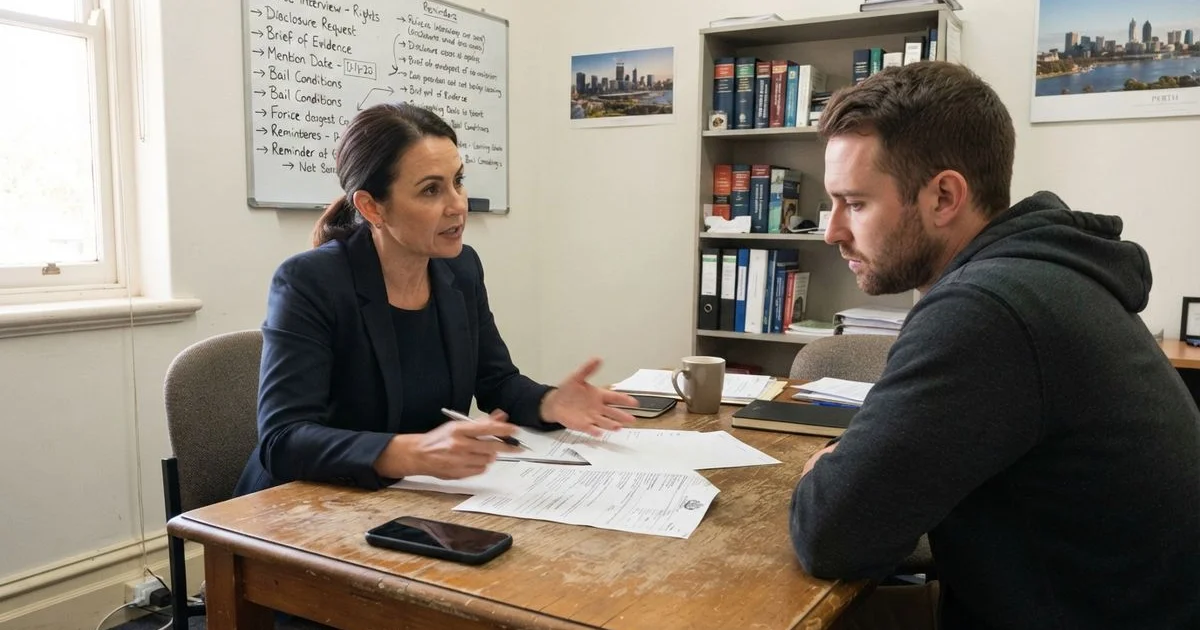
Being arrested, or having someone close to you arrested, is disorienting even when you’ve done nothing wrong. Knowing the general shape of what happens next can make a frightening situation slightly more manageable. This is general information about how the process typically works in WA, not legal advice for a specific matter.
Your basic rights during an arrest
- You generally have the right to be told why you’re being arrested.
- You generally have the right to remain silent beyond providing your name and basic details, and you’re not required to explain yourself or answer questions about the alleged offence.
- You generally have the right to contact a lawyer, and to have that lawyer present or available before being formally interviewed in most circumstances.
- Anything you say can be used later, so a calm, “I want to speak to a lawyer first” is a reasonable response to most questions beyond identifying yourself.
What typically happens, step by step
| Stage | What usually happens |
|---|---|
| Arrest | Police explain the reason for arrest and take you into custody |
| Processing | Personal details are recorded, and you’re generally given the chance to contact a lawyer |
| Interview | Police may ask questions about the alleged offence, which you can decline to answer beyond identifying yourself |
| Decision | You may be released, released with bail conditions, or held for a bail hearing depending on the matter |
| Court | A first court date is set where the charge is formally read and the matter progresses |
Not every arrest follows every one of these steps in the same order, and more serious matters involve more formal processes than minor ones.

Being interviewed under caution
If police want to formally question you about an alleged offence, you’ll typically be cautioned first, meaning you’re reminded that you don’t have to say anything and that anything you do say may be used later. Requesting a lawyer before that interview happens, even briefly by phone, is a reasonable and common step, not an admission of guilt. Lawyers experienced in criminal law can often advise you on the phone in the short term even if they can’t attend in person straight away.
Why the first few hours matter
What’s said, or not said, in the hours immediately after an arrest can genuinely affect how a matter unfolds later. This isn’t about hiding anything, it’s about making sure any explanation you give is given with proper legal advice rather than under pressure in an unfamiliar and stressful setting. A criminal lawyer’s advice at this early stage is often about protecting your position procedurally, not about the underlying facts of what happened.
Bail, briefly
If you’re not released outright, bail is the process by which you may be allowed to remain in the community while your matter proceeds through court, usually subject to conditions. Bail isn’t automatic, and decisions depend heavily on the nature of the alleged offence and individual circumstances. If bail becomes an issue in your matter, a lawyer experienced in criminal law can explain the realistic options given your specific situation.
If you’re supporting someone who’s been charged
Watching a family member go through this process is stressful in its own way. Practical support, helping them find and contact a lawyer, keeping track of court dates, and staying calm rather than catastrophising, tends to be more useful than trying to advise on the legal substance yourself. Leave the legal strategy to the lawyer, and focus on the practical and emotional support only you can provide.
What to do if you or someone you know is arrested
Stay calm, ask clearly to contact a lawyer, and avoid making detailed statements about the alleged offence before getting advice. If a family member is arrested and you’re trying to help from outside, contacting a criminal lawyer on their behalf, or helping them do so, is usually the most useful thing you can do in those first hours.
This is general information about the arrest process in WA and is not a substitute for advice on a specific matter. If a matter ends in a conviction, our guide on spent convictions and criminal record checks in WA explains how that record can affect things like job applications later on. You can compare criminal lawyers in Perth and see how firms are assessed in our methodology. Visit the Perth Legal Guide homepage for other practice areas.
FAQ
- Do I have to answer police questions after being arrested?
- In most circumstances, you have the right to remain silent beyond providing basic identifying details. You're generally not required to answer questions about the alleged offence, and it's reasonable to say you want to speak to a lawyer before answering further questions.
- Can I call a lawyer straight away?
- You generally have the right to contact a lawyer, and police are typically required to allow this within a reasonable time after arrest. Ask clearly and early, since this right isn't always volunteered to you.
- Will I definitely be kept in custody?
- Not necessarily. Depending on the alleged offence and your circumstances, you may be released with a court date, released on bail with conditions, or, for more serious matters, kept in custody until a bail hearing. This varies significantly by case.
- Does getting arrested mean I'll have a criminal record?
- No. An arrest is not a conviction. Many matters are resolved without a conviction being recorded, particularly first offences or minor charges, depending on how the matter proceeds and the outcome in court.