
De facto relationships and property rights in WA
By Mei Nair · Updated 2026-06-29
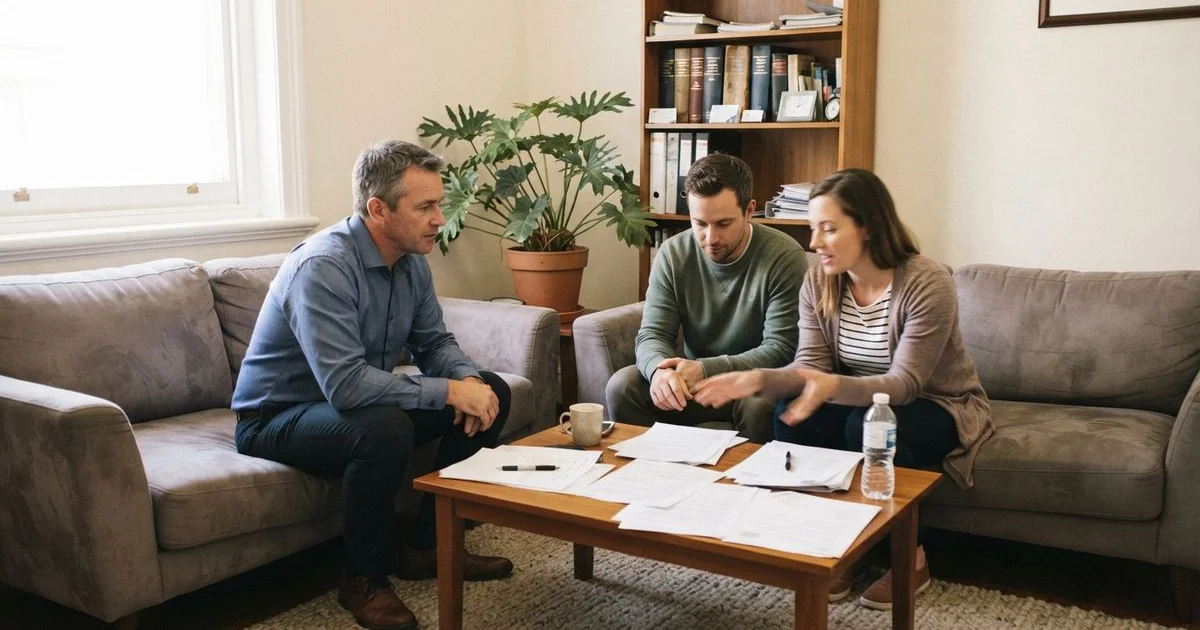
A lot of Perth couples assume that because they never married, they don’t have the same legal exposure or protection as a married couple would if the relationship ends. That assumption is often wrong. This is general information about how de facto property rights typically work in Western Australia, not advice on your specific situation.
What makes a relationship “de facto” in the eyes of the law
There’s no marriage certificate to point to, so de facto status is assessed by looking at the relationship as a whole. Courts weigh things like:
- how long you lived together and whether that was continuous
- whether you shared finances, a joint bank account, or a mortgage
- whether the relationship was publicly known as a couple
- whether you have a child together
- the degree of mutual commitment to a shared life
No single factor decides it. A couple who lived together for eighteen months with a joint mortgage and a child together could be found de facto more easily than a couple who lived together for three years but kept finances completely separate and told few people they were a couple.
De facto vs registered relationships vs marriage
| Relationship type | How it’s established | Property rights on separation |
|---|---|---|
| Marriage | Legal ceremony and registration | Full property settlement rights, no time-lived threshold |
| Registered relationship | Formal registration with WA authorities | Recognised similarly to de facto for most purposes |
| De facto (unregistered) | Assessed on the facts of the relationship | Property rights available once de facto status is established |
| Casual or short-term relationship | Not formally recognised | Generally no automatic property claim |
Protecting yourself while the relationship is going well
Couples who want certainty don’t have to wait for a dispute to sort out where they stand. A binding financial agreement, sometimes referred to informally as a de facto version of a prenuptial agreement, can set out in advance how property would be divided if the relationship ends, regardless of what a court might otherwise decide. These agreements need to meet specific legal requirements to be enforceable, including independent legal advice for both partners, so they aren’t something to draft informally between yourselves.
Why this catches people off guard
The most common surprise is the time limit. Married couples can generally apply for property settlement at any point after separation, within reason. De facto couples in WA face a considerably shorter window, generally two years from separation, to bring a claim. People who assume they have plenty of time to “sort it out later” can find that window has closed before they’ve even started looking for legal advice.
Superannuation and de facto relationships
Superannuation can be treated as property for division purposes between de facto couples in WA, similar to married couples, though the mechanics of splitting it are more technical than dividing a bank account or a house. This is a common area where people underestimate what’s actually on the table in a separation, particularly after a long relationship where one partner accumulated significantly more super than the other.
What’s actually up for division
If de facto status is established, property acquired during the relationship, and sometimes property brought into it, can be assessed for division based on financial contributions, non-financial contributions like homemaking or raising children, and each partner’s future needs. This applies whether the asset is in one partner’s name or held jointly. Superannuation can also be included in some circumstances.
What to do if you’re unsure where you stand
If your relationship has ended and you’re not certain whether de facto property rights apply to you, don’t wait to find out. Getting an early assessment costs far less than losing a legitimate claim to a missed deadline. A lawyer can usually give you a reasonably quick read on whether your relationship is likely to meet the de facto threshold, based on the same factors a court would apply.
This is general information about how de facto property rights typically work in WA and isn’t a substitute for advice on your specific circumstances, especially given the time limits involved. You can compare family lawyers in Perth who handle de facto property matters, and see how we assess firms in our methodology. Visit the Perth Legal Guide homepage for more family law resources.
FAQ
- How long do you need to live together to be considered de facto?
- As a general guide, two years of living together as a couple is the usual threshold, though this isn't a strict cutoff. A relationship of any length can still be recognised as de facto if there's a child of the relationship, or if one partner made substantial contributions.
- Do we need to have lived at the same address the whole time?
- Not necessarily. Courts look at the overall nature of the relationship, including financial interdependence, shared social life and commitment, rather than requiring an unbroken period at one address. Periods of separation or living apart for work can complicate but don't automatically rule out a finding of de facto status.
- Is there a time limit to make a property claim after separation?
- Yes. For de facto couples in WA, claims generally need to be brought within two years of separation, which is shorter than many people expect. Missing this window can mean losing the ability to claim, though limited exceptions exist.
- Does it matter whose name is on the house?
- Not on its own. Property acquired during a de facto relationship can be subject to division regardless of whose name is on the title, based on each partner's financial and non-financial contributions and future needs.
Related on this site
- Browse family law providers
- Best family law in Perth Metropolitan →
- Family law costs in Perth: what drives the price
- The family law process in WA: mediation, court and property settlement
- Parenting arrangements after separation: what WA law expects
- Spent convictions and criminal record checks in WA
- All guides →